024_Computing Hut-Radical Normal II
Northwest China
AI-Based Research-Oriented Design
2025
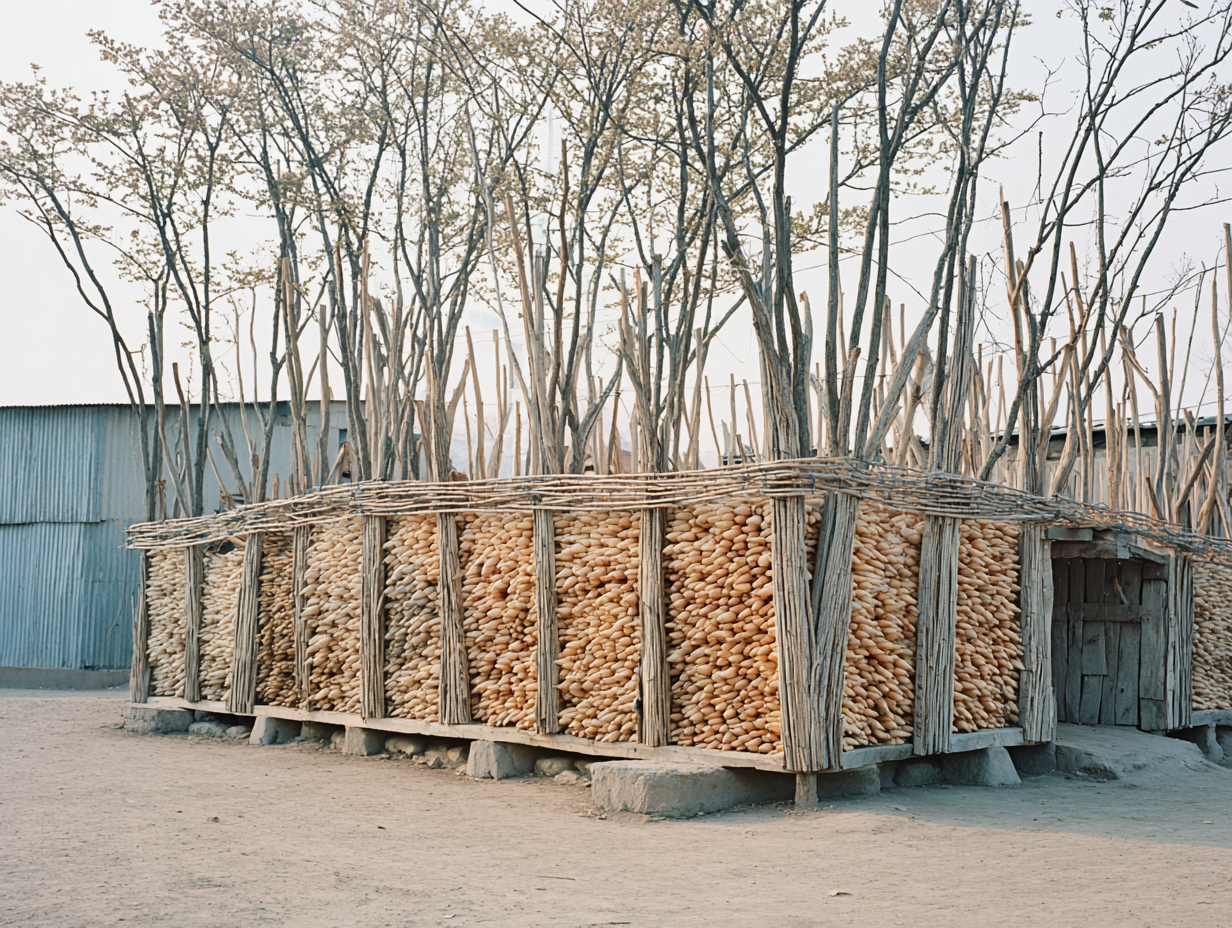
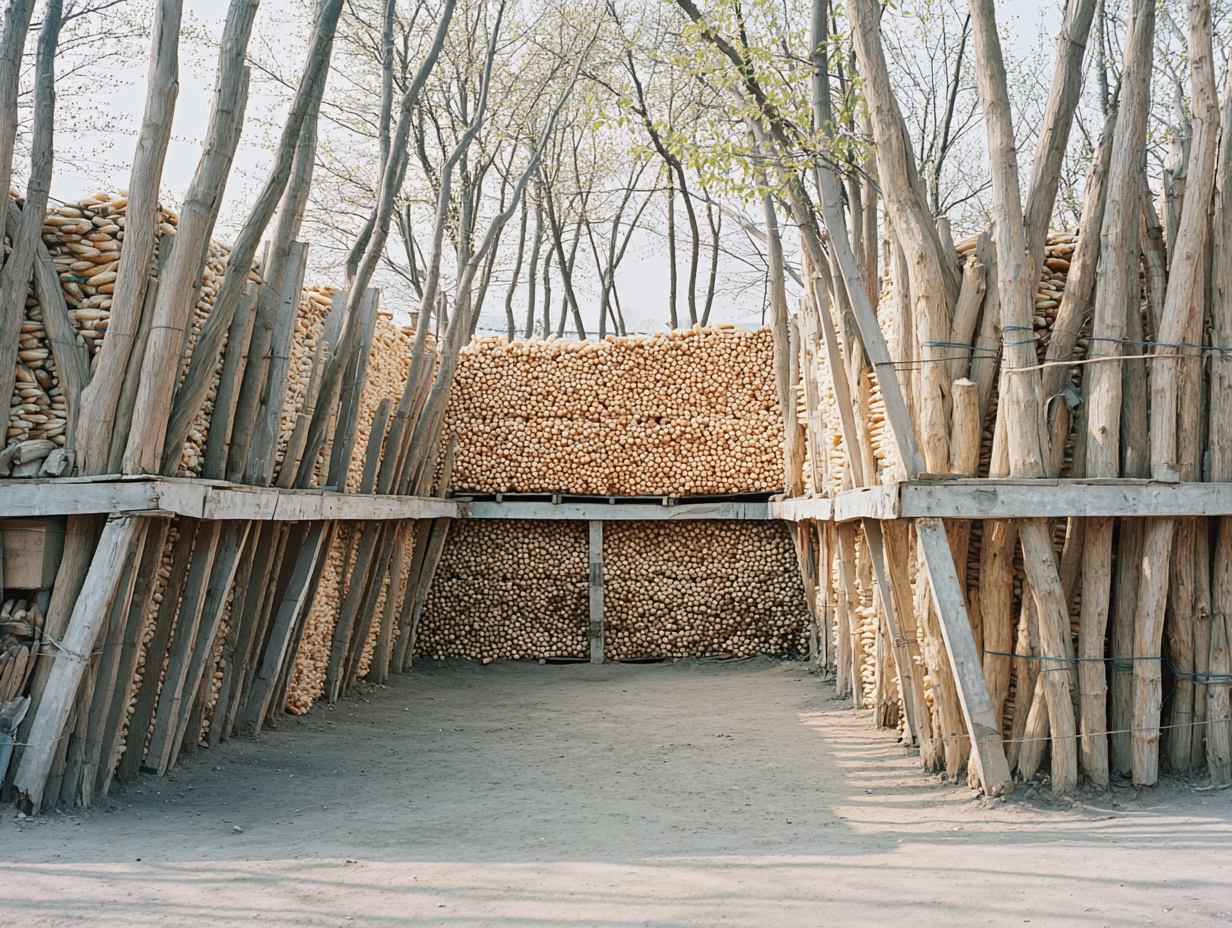
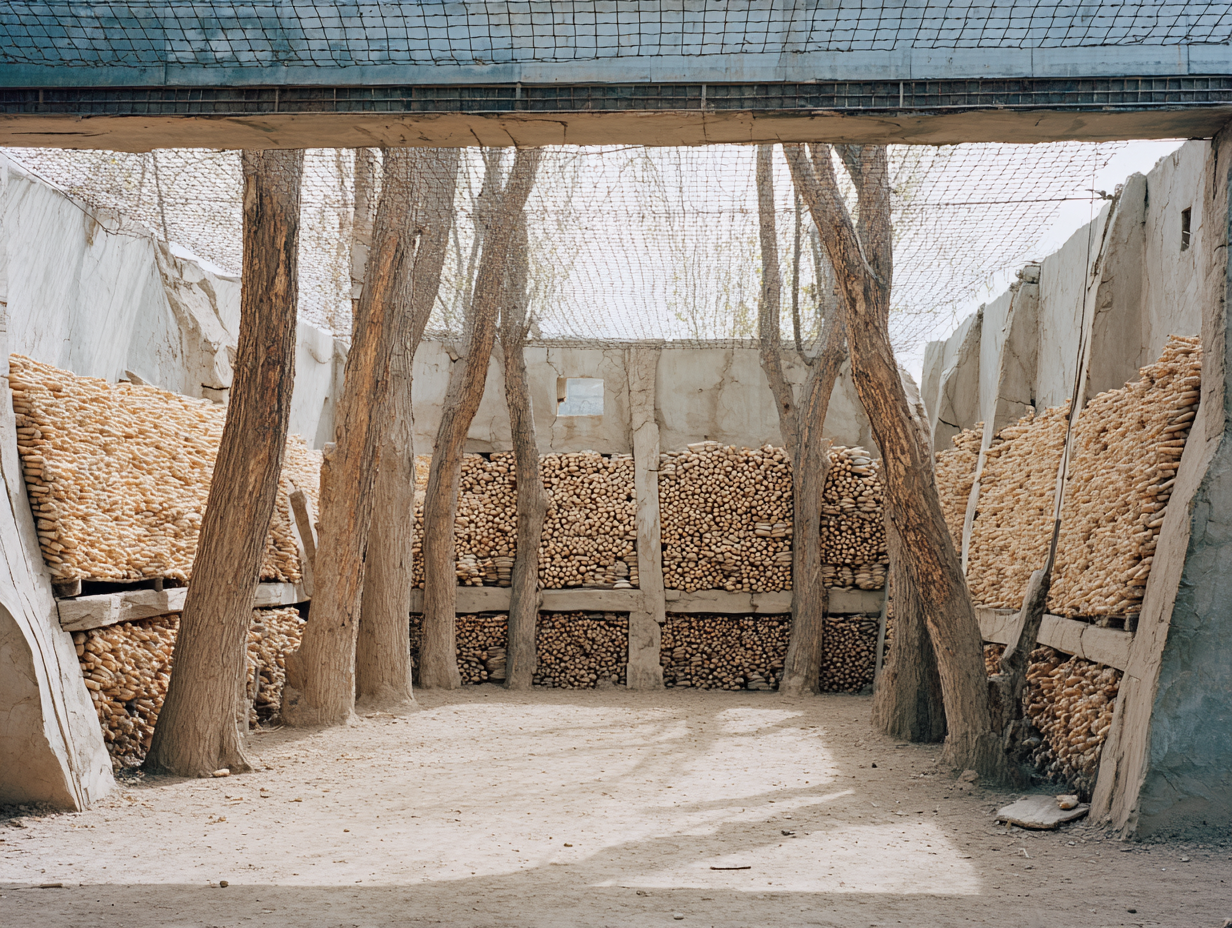
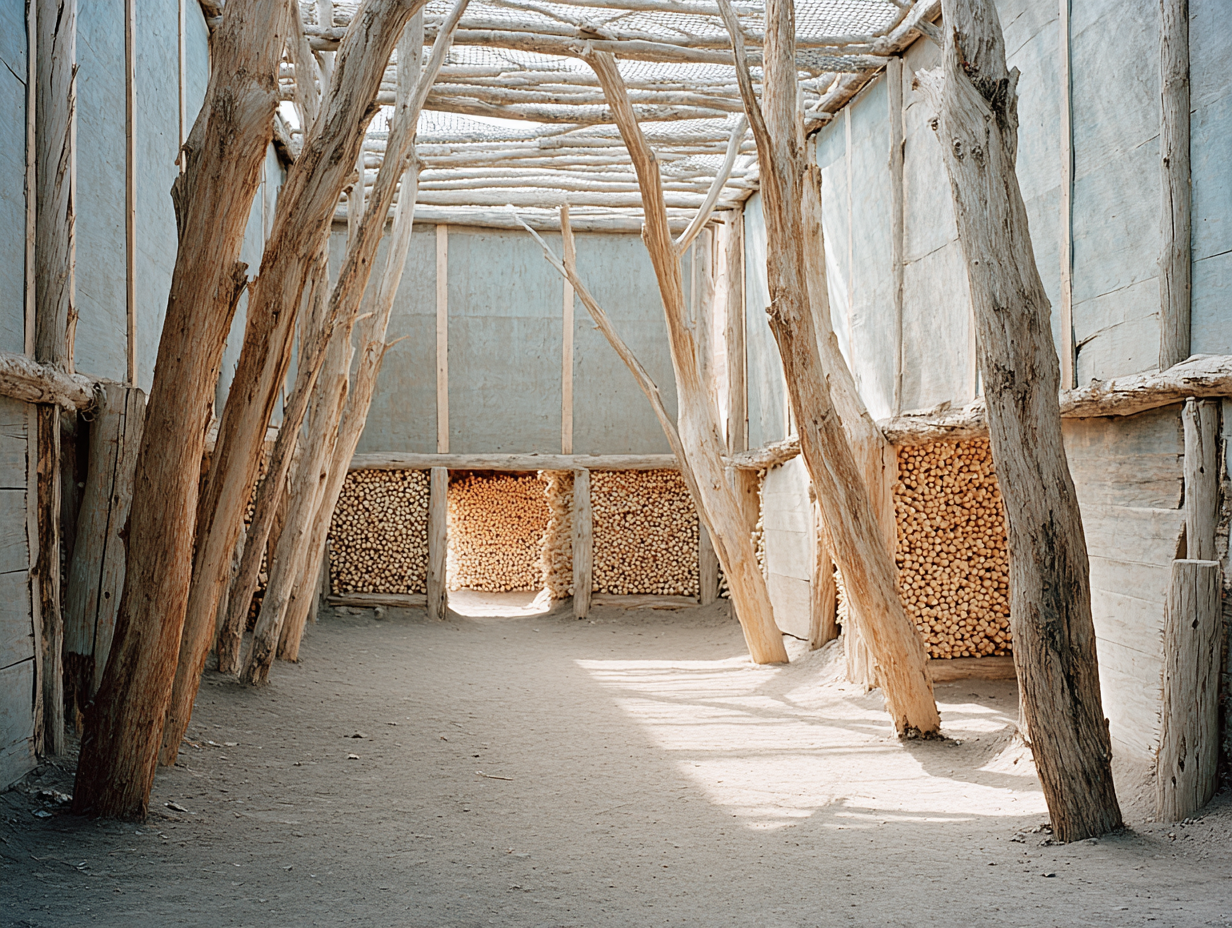
Developed through image-to-image generation workflows, the project explores rural drying landscapes in northern China through the principle of “as found.” Existing trees, temporary wooden poles, stacked agricultural materials, and rural infrastructure are reassembled into a spatial language between landscape, structure, and village public space. Rather than pursuing a complete architectural form, the proposal responds directly to existing conditions and everyday construction logic. Leaning poles, temporary enclosures, and naturally grown trees create an open and porous environment where drying, gathering, resting, and circulation can coexist. The resulting spaces retain the roughness, contingency, and temporality of rural environments, existing between environmental installation and collective public space. “Computing Hut-Radical Normal” is an ongoing AI-assisted design practice. The project critically investigates the relationship between people, materials, and spatial production within contemporary economic and technological networks. Rather than revisiting the idealized “primitive hut” of architectural history, the project focuses on the low-cost, temporary, and pragmatic shed structures found at the margins of industrial production, treating them as spatial prototypes of the contemporary condition.
Placeholder.